Designing neuroinclusive events starts with recognising that people experience events differently.
We’ve just completed Neurodiversity First Responder training with Welcome Brain Consulting, which reinforced many of the principles we’ve developed through years of delivering conferences and events.
While the training focused on recognising and responding to neurodivergent needs, it reinforced something we’ve seen repeatedly through years of designing neuroinclusive events.
➡️ People don’t all experience events in the same way.
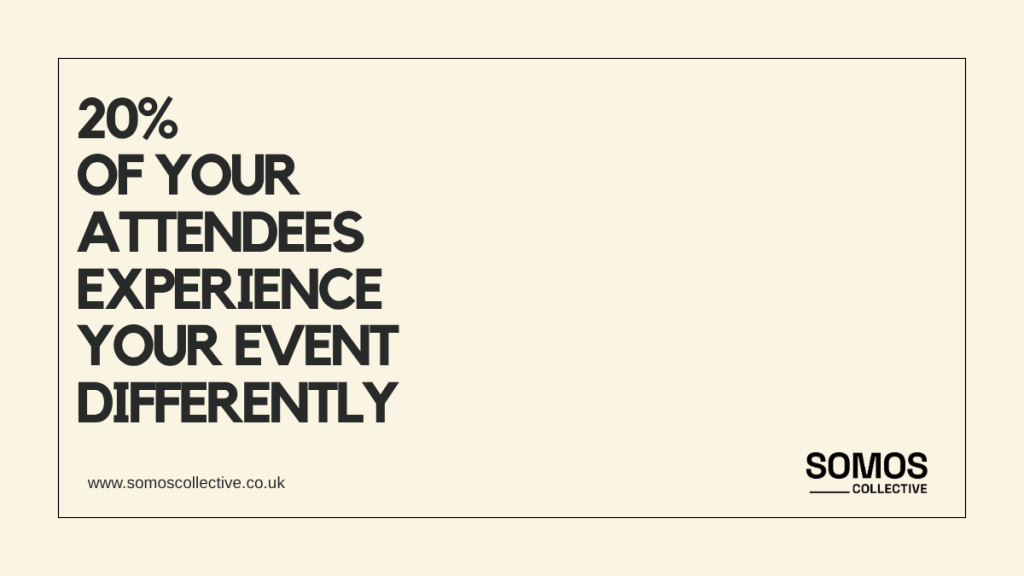
➡️ It’s estimated that around 15 – 20% of people are neurodivergent, including those with ADHD, autism, dyslexia, dyspraxia and other neurodivergent profiles.
➡️ That includes ADHD, autism, dyslexia, dyspraxia and a range of other profiles – many invisible, many undisclosed.
Over the years, we’ve introduced quiet spaces, low-sensory environments, wellbeing support, more inclusive catering options, clearer communications and different approaches to networking. Some changes were deliberate. Others came from listening, learning and improving as we went.
Many event barriers are created by design
What the training reinforced is that many of the barriers people encounter at events aren’t problems with the individual. They’re often the result of design defaults.
• Registration processes
• Networking formats
• Signage
• Lighting
• Sound
• Communication
The things many attendees barely notice can have a significant impact on somebody else’s experience.
Small changes can have a big impact
The encouraging part is that many of the most effective changes aren’t complicated or expensive. They simply require organisers to look at their events through a wider lens.
Welcome Brain’s framework makes those practical steps clear. Their Neurodiversity in Events Checklist, developed with the EICC and ABPCO, gives event professionals a useful starting point for creating more inclusive experiences.
For us, the training hasn’t changed our direction. It has strengthened our understanding of why these considerations matter and reinforced our commitment to designing events that work for a wider range of people.
Inclusive event design benefits everyone
Because when events work better for some, they almost always work better for everyone.
If you’re considering how your event can be more inclusive, we’d be glad to talk about what that looks like in practice.
Thank you to Welcome Brain for an insightful and thought-provoking neuroinclusive events programme.